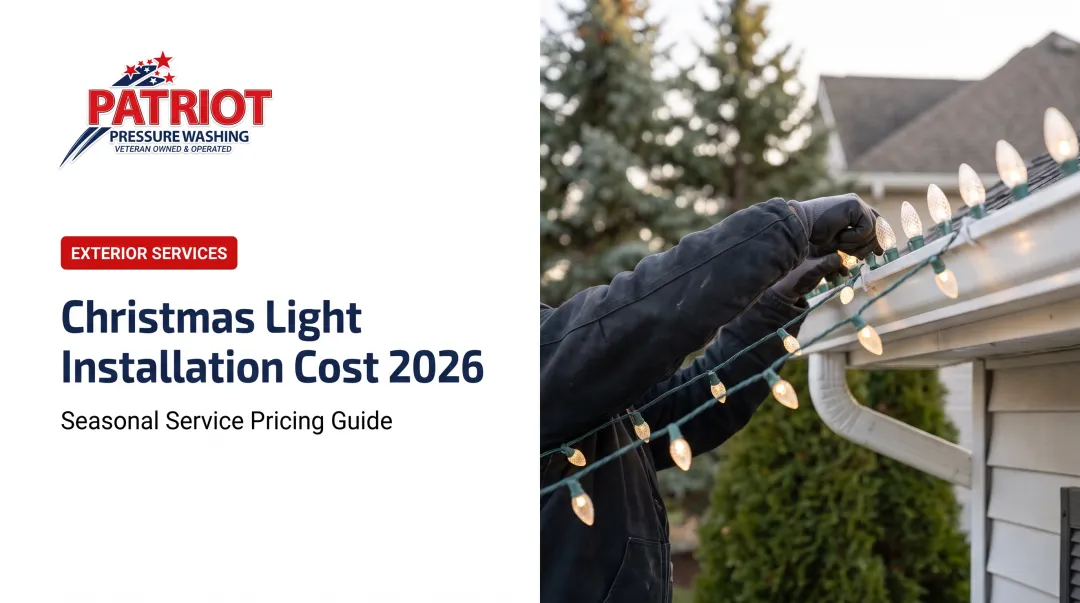

Confident DIYers with single-story homes and simple rooflines can usually handle it themselves. Multi-story homes, steep roofs, or elaborate designs are a different story — that's where trained professionals earn their keep.
Get it wrong and the risks stack up fast:
- Falls from ladders or roofs
- Blown circuits or tripped breakers
- Damaged gutters, fascia, or shingles
- Sagging, uneven displays that look worse by New Year's
This guide walks through the full 2026 installation process, from planning to takedown, plus when it makes sense to call in professionals like Patriot Pressure Washing.
Key Takeaways
- Professional installation typically runs $250-$1,500 for basic packages; full-property designs cost more
- Best window: late October through mid-November; remove lights by mid-January
- Plan electrical load before you lock in the display design
- DIY suits simple, single-story homes; multi-story or complex designs call for a professional
Installation Guide for Christmas Lights in 2026
A solid install runs through planning, safety checks, materials, placement, power, and a final walkthrough. Skip one and you invite mid-season outages or overloaded circuits.
Time expectations:
- Single-story home: 1-3 hours
- Larger or multi-story home with intricate design: a full day or more, often with 2+ people
Home Depot's Pro Referral network reports the same pattern: small crews finish most holiday displays in under a day; larger jobs take longer.
Prerequisites and Safety Considerations
Before anything gets hung, check the bones of the house:
- Roof and gutter condition: Loose shingles or damaged gutters won't support clips reliably
- Electrical readiness: Confirm nearby GFCI outlets and calculate total wattage before plugging in a single strand
- Weather: Skip icy or wet roof conditions entirely — ladder work and moisture don't mix
Follow OSHA's ladder safety fact sheet before you climb:
- Use the 4-to-1 setup rule (for every 4 feet of height, move the base 1 foot out)
- Extend the ladder 3 feet above the roofline
- Keep three points of contact at all times

Non-negotiables:
- Never install alone on a steep or wet roof
- Never use a damaged extension cord
- Never exceed the rated amperage on a circuit
Tools and Materials Needed
Essentials:
- Properly rated extension ladder
- Gutter- or shingle-specific light clips (never staples or nails)
- Outdoor-rated extension cords
- Timer or smart plug
Optional but useful:
- Light-measuring tape
- Roof safety harness for steep pitches
- C9/C7 bulbs or mini LED strings (choose based on look and total wattage)
Commercial-grade LEDs last longer than basic retail strands. Creative Displays cites 6-8 years for pro-grade lighting versus 2-3 seasons for standard retail strings, largely because sealed, one-piece bulb-socket construction keeps moisture out.
How to Install Christmas Lights (Step-by-Step)
Skipping measuring or load-balancing is how mid-season failures and fire risks start.
- Plan the layout on paper or with a quick phone sketch so rooflines, windows, and focal points are set before you buy or climb.
- Measure rooflines, windows, and features for total linear footage. Angi recommends starting with at least 60 feet of exterior string lights, plus 10-12 feet per awning.
- Position the ladder safely and secure clips along the roofline before running lights, working section by section.
- Connect power carefully: use GFCI outlets, waterproof plug covers, and split larger displays across multiple circuits.
- Add a photo-sensor timer for automatic dusk-to-dawn operation so you are not switching strands by hand each night.
- Step back and check for even spacing, sagging, and bulbs facing the wrong way before you call it done.

Post-Installation Checks and Validation
Visual checks:
- Even spacing along the roofline
- No exposed wiring
- Clips secure enough to survive wind gusts
Functional testing:
- Every strand lights fully, end to end
- Timer cycles correctly at dusk
Flickering lights, warm plugs, or a breaker that keeps tripping point to an overloaded circuit. Fix it immediately, not after Christmas dinner. Skip validation and you will likely find the failure in a storm, or on Christmas morning.
Common Installation Problems and Fixes
Four issues account for most post-installation headaches homeowners run into.
Sagging or Loose Lights
Problem: Strands droop or fall within days. Cause: Wrong clip type, or clips not fully seated on gutters or shingles. Fix: Switch to gutter-specific clips and re-secure at tighter intervals, especially around corners.
Tripped Circuits or Dead Sections
Problem: Part or all of the display goes dark, or the breaker trips repeatedly. Cause: Too many strands overloading one circuit. Fix: Redistribute strands across multiple circuits and use a dedicated outdoor-rated extension cord per run.
Water Damage to Connections
Problem: Lights short out or flicker after rain or snow. Cause: Unprotected plug connections exposed to moisture. Fix: Use waterproof electrical connection covers and keep connections elevated off the ground.
Blown Fuses or Frayed Wiring
Problem: A strand or section looks dead even when the breaker and outlet are fine. Cause: A blown fuse in the plug, or damaged wire on the strand. Fix: Check the fuses inside individual plugs and inspect for frayed wiring before replacing the whole string—often one fuse is the real culprit.

Why Many Homeowners Choose Professional Installation
Climbing onto a steep roof in near-freezing temperatures isn't most people's idea of holiday cheer. Professional crews bring trained labor plus the tall ladders and harnesses needed for multi-story or steep-roof homes, cutting fall risk sharply.
Patriot Pressure Washing, based in Hartford, Connecticut, serves exteriors across Hartford, Manchester, and West Hartford with the same discipline it brings to pressure washing. Its holiday lighting service includes:
- Custom display design for the specific property
- Professional-grade LED and outdoor lighting built for Connecticut winters
- Full install by trained crews
- Mid-season maintenance if a bulb goes out or a section fails
- Post-season removal and storage

Founded by Eric, a combat-disabled veteran with 19 years of military service, the company applies the same upfront-pricing, no-surprises approach to holiday lighting that it uses on every cleaning job. Pricing depends on property size, design complexity, and light type — you'll get a personalized quote rather than a generic number.
That mid-season repair support matters more than it sounds. Nobody wants to climb a frozen ladder in January to fix one dead bulb, or take everything down themselves once the holidays are over.
Pro Tips for Installing Christmas Lights Effectively
A few practical moves make install day safer and next year’s setup faster:
- Install before the first hard freeze. Roofs and gutters are far easier and safer to work on before ice sets in.
- Match cord and clip color to your trim for a cleaner daytime look when the lights are off.
- Label and store lights by section (front roofline, side windows, etc.) to cut next year’s setup time in half.
- Hire a specialist for ladder or multi-story work if you’re uncomfortable with heights rather than risk a fall.
Conclusion
Getting Christmas light installation right affects more than curb appeal. It affects safety, how long the display lasts, and whether you're troubleshooting a dead strand on Christmas Eve instead of enjoying it. Plan carefully, balance your electrical load, and run through final safety checks before you call it finished.
If the job exceeds your comfort level (steep roof, multiple stories, elaborate design) hiring a trusted local pro is the smarter move, not a shortcut.
Frequently Asked Questions
How much does Christmas light installation cost near me?
Basic packages typically run $250–$1,500, with full-property or custom designs costing more. Home size, number of stories, and design complexity all affect the final price.
When should I install Christmas lights?
Late October through mid-November is the ideal window, before hard freezes make roof work riskier. Plan to remove lights by early-to-mid January.
How long does Christmas light installation take?
Most homes take 1-5 hours, depending on size and design complexity. Larger or more intricate installations can stretch to a full day or two.
How many feet of Christmas lights do I need for my home?
Basic homes typically need 100-200 feet; full-property coverage with trees, windows, and pathways can require 400+ feet. Measure your rooflines and features first for an exact count.
Do you tip Christmas light installers?
Tipping isn’t required. For strong service, $20–$50 or about 10–15% of the job cost is a common thank-you.
What should I look for when hiring a Christmas light installer?
Look for insurance coverage, solid reviews, transparent upfront quotes, and clear takedown terms. Confirm whether maintenance and removal are included before booking.