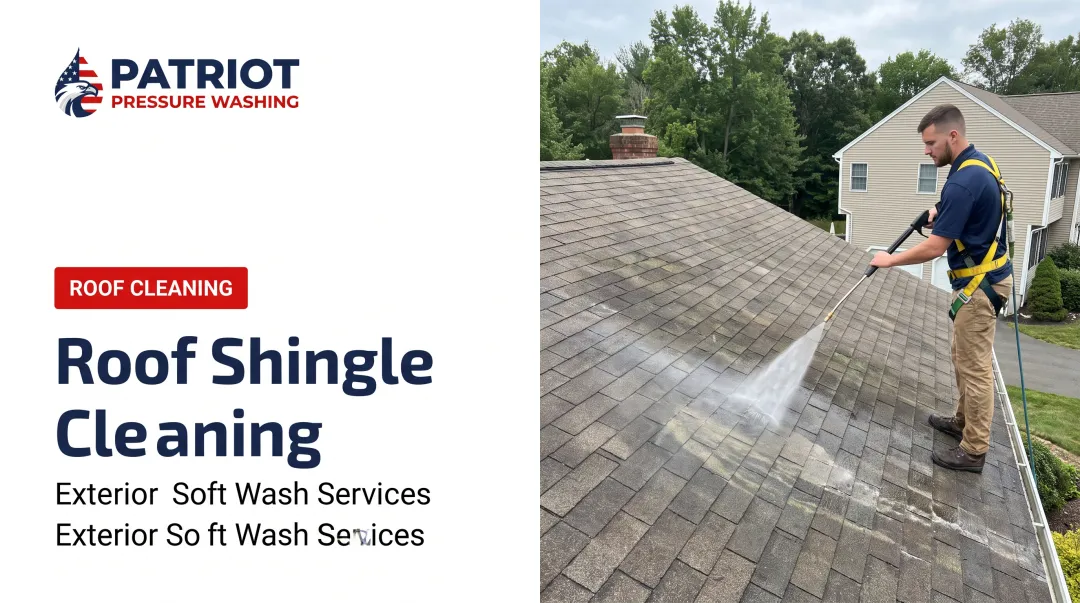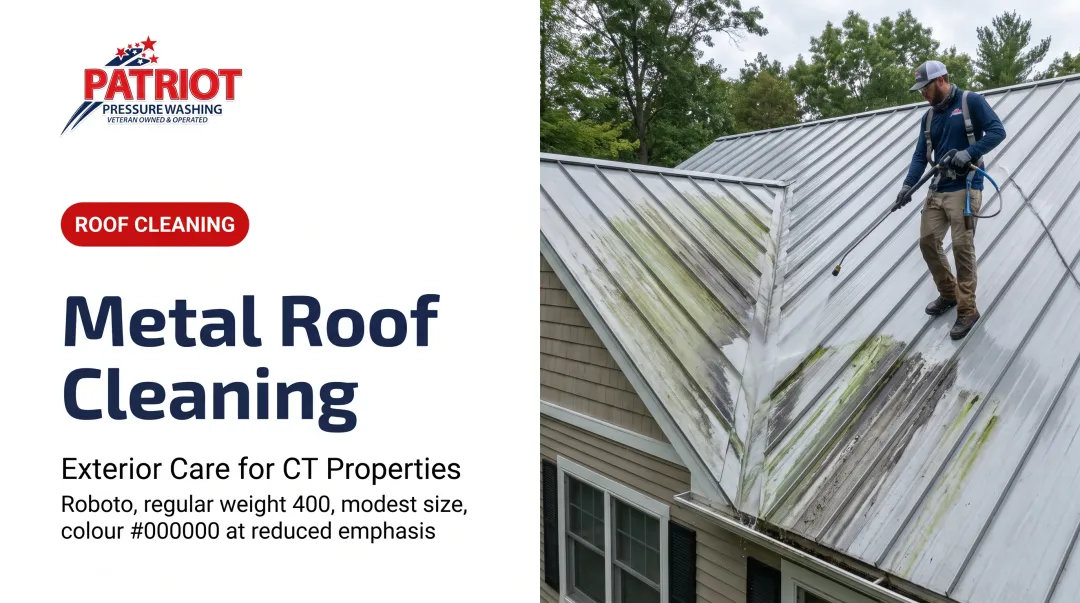

Moss holds moisture against your shingles. It lifts edges, strips protective granules, and opens the door to leaks. In Hartford's humid summers and tree-lined neighborhoods, shaded roof sections stay damp long enough for moss to take hold and keep spreading.
This guide covers safe DIY moss removal, the mistakes that void warranties and shorten roof life, prevention strategies, and when it's time to call in a professional.
TL;DR
- Moss thrives in shaded, damp roof areas and can lift shingles or trap moisture that leads to leaks
- Never use a pressure washer on shingles: rinse at low pressure with a bleach-water or eco-friendly solution
- Trim trees and clean gutters to limit moisture and slow regrowth
- DIY works for small, accessible patches; steep or heavily mossed roofs need a professional
- Spring or fall gives the mildest, safest conditions for roof work
How to Clean Moss Off Your Roof Safely
Step 1: Prep the Roof and Surrounding Area
Before you touch a bottle of cleaner, protect what's below you.
- Cover landscaping and plants with plastic sheeting to shield them from chemical runoff
- Set up a sturdy, well-anchored ladder extending at least 3 feet above the roofline
- Wear non-slip shoes, gloves, and eye protection
- Check the forecast for a dry, calm day with no rain expected for several hours
Step 2: Apply a Roof-Safe Cleaning Solution
The Asphalt Roofing Manufacturers Association recommends a 50:50 mix of laundry-strength liquid chlorine bleach and water, applied with a pump sprayer. Prefer a gentler route? A vinegar, dish soap, and horticultural oil blend works as an eco-friendly alternative.
Whichever you choose, check your shingle manufacturer's guidance first. Not every brand approves chemical treatment. Apply evenly, avoid soaking the roof, and let the solution dwell 15 to 20 minutes. Don't let it dry out completely; that can leave residue that won't fully rinse away.
Step 3: Loosen and Rinse Away Moss
Once the solution has done its work:
- Loosen softened moss with a soft-bristle brush or leaf blower, never a stiff scrub brush
- Rinse with a garden hose on low pressure, working from the peak down toward the gutter
- Angle your spray downward, following the shingle line, not against it

Never use a pressure washer. GAF's own guidance warns that excessive pressure strips protective granules and can lift or warp shingles, often voiding your warranty in the process.
Step 4: Clear Debris and Inspect
Don't stop once the moss is off the roof.
- Clear loosened moss clumps from gutters and downspouts before they cause clogs
- Inspect shingles for lifting, curling, or bare spots where granules washed away
- Note any soft or sagging sections for follow-up
If your roof is steep, high, or heavily covered, that's when DIY stops making sense. Patriot Pressure Washing provides soft-wash roof cleaning for Hartford homeowners, using low-pressure equipment and material-specific solutions, then walks the finished job with you to confirm it's done right.

What You Need Before Cleaning Roof Moss
The right gear affects both your results and your safety on the ladder.
Essential equipment:
- Sturdy extension ladder and safety rope or harness
- Non-slip shoes, gloves, and safety goggles
- Pump sprayer for even solution application
- Soft-bristle brush (never stiff-bristled)
- Garden hose with adjustable low-pressure nozzle
Cleaning solution options:
- Chlorine bleach and water (50:50 ratio, per ARMA guidance)
- Eco-friendly vinegar, dish soap, and horticultural oil mix
Before starting, confirm your roof type. Asphalt shingle, tile, and metal roofs each tolerate chemicals and abrasion differently. What's safe for metal can damage shingle granules.
Patriot Pressure Washing's technicians match the method to the surface—whether asphalt shingle, tile, metal, slate, or cedar shake—so the clean doesn't cost you roof life.
Key Factors That Affect How Well Moss Removal Works
Timing, technique, and roof conditions all shape whether your cleaning actually sticks.
Roof Slope and Sun Exposure
North-facing, shaded slopes retain moisture far longer than sun-exposed sections, giving moss a head start on regrowth. If overhanging branches compound the shade, expect to repeat treatment more often unless you address the shade itself.
Solution Dwell Time
Fifteen to twenty minutes is the sweet spot. Too short, and moss roots survive the treatment. Too long, and the solution dries before you rinse, leaving residue and reducing effectiveness.
Water Pressure Used
This one's non-negotiable: low pressure only. Pressure washers strip granules and can void shingle warranties outright. A garden hose on a gentle setting removes loosened moss just fine once the solution has broken it down.
Roof Material
| Material | Chemical Tolerance | Technique |
|---|---|---|
| Asphalt shingle | Moderate, sensitive to abrasion | Soft brush, gentle rinse |
| Tile | Higher tolerance | Firmer brushing acceptable |
| Metal | Varies by coating | Check manufacturer specs first |

Common Mistakes and Troubleshooting Tips
Most moss-removal failures trace back to one of these mistakes:
- Using a pressure washer — strips protective granules and shortens shingle life
- Scrubbing too aggressively — lifts or cracks shingles and creates new leak points
- Skipping gutter cleanup — loosened moss debris clogs downspouts and backs up water
If moss returns quickly: Check for tree overhang still shading that section, or poor attic ventilation trapping moisture under the roof deck. Clear the growth, but fix the moisture source or the moss will come back.
If shingles look damaged or lifted after cleaning: Stop and get a professional roof inspection before any further treatment. Working on a compromised roof can turn a moss problem into an active leak.
Prevention Tips and When to Call a Professional
Cleaning moss off once is easy. Keeping it off takes ongoing maintenance.
Prevention steps:
- Trim overhanging branches to increase sunlight exposure and reduce debris buildup
- Keep gutters clear year-round, especially after fall leaf drop
- Consider zinc or copper strips near the ridge, but check with a roofing professional first, since improper installation can create leak points
When to hire a pro:
- Extensive moss coverage across multiple roof sections
- Steep or high rooflines that aren't safely walkable
- Repeated regrowth despite consistent DIY efforts
Patriot Pressure Washing has handled exactly this kind of job. One Hartford-area customer's roof needed more time due to heavy moss and dirt accumulation. The crew stuck with it, and she reported her roof "looked like new" afterward.

As a veteran-owned company serving Hartford, Cromwell, Glastonbury, Rocky Hill, and surrounding Connecticut communities, Patriot Pressure Washing backs its roof cleaning with a 100% satisfaction guarantee. The low-pressure soft-washing process is built to protect shingles rather than strip them.
Frequently Asked Questions
How much does it cost to have a roof cleaned of moss?
Cost varies based on roof size, moss severity, and roof access. National averages run roughly $296–$626 for roof cleaning. Get a local quote for an accurate estimate on your property.
What is the best way to clean moss off a roof?
Apply a low-pressure bleach-water or eco-friendly solution, let it dwell 15-20 minutes, then loosen moss with a soft-bristle brush. Rinse thoroughly with a garden hose on low pressure, never a pressure washer.
What is the best time of year to remove moss from a roof?
Spring or fall works best. Moss is still active enough to respond to treatment, and mild, dry weather makes roof work safer and gives the solution time to work without drying out.
Is it worth cleaning moss off the roof?
Yes. Left untreated, moss traps moisture that lifts shingles and shortens your roof's lifespan. Removing it protects your investment and preserves your home's curb appeal.
What kills moss on a roof?
A 50:50 chlorine bleach and water solution is the standard, though oxygen-based cleaners and vinegar/dish soap mixes work as gentler alternatives. Always dwell 15-20 minutes before rinsing.
How can I remove green algae from my roof?
Algae responds to the same bleach-water rinse method used for moss. It’s mostly cosmetic, not structural, but it still signals excess moisture worth addressing.