
Introduction
Hartford homeowners face a familiar choice when siding, roofs, and hard surfaces show dirt, algae, or mildew: soft washing or pressure washing? Organic growth and staining build up fast in our climate, and the method you pick determines whether the cleanup lasts.
The wrong approach can crack siding, drive water behind exterior panels, strip protective granules from shingles, or leave algae and mold alive at the root so they return within months.
The right method protects your home, helps preserve manufacturer warranties, and keeps surfaces cleaner longer. This guide compares both options by surface type, stain, and maintenance goals so you can choose with confidence.
Key Takeaways
- Soft washing kills algae, mold, and mildew at the root with low-pressure cleaning solutions
- High-pressure streams blast stubborn dirt and stains off durable surfaces like concrete
- Match method to surface: soft wash for siding, roofs, stucco, and paint; pressure wash for driveways and masonry
- Wrong method choice can void warranties, damage materials, or let growth return quickly
Soft Washing vs Pressure Washing: Quick Comparison
| Category | Soft Washing | Pressure Washing |
|---|---|---|
| Pressure Level | Low pressure (similar to garden hose) | High pressure (varies by surface) |
| Cleaning Method | Chemical-based cleaning that kills organic growth at the root | Mechanical force that physically removes surface contaminants |
| Ideal Surfaces | Vinyl siding, asphalt roofs, stucco, wood, painted exteriors | Concrete driveways, certain masonry (with limitations) |
| Longevity of Results | Longer-lasting when killing organic growth | Removes surface layer; growth can return faster |
| Risk of Damage | Minimal when applied correctly to appropriate surfaces | Higher risk on delicate surfaces; requires expertise |
What is Soft Washing?
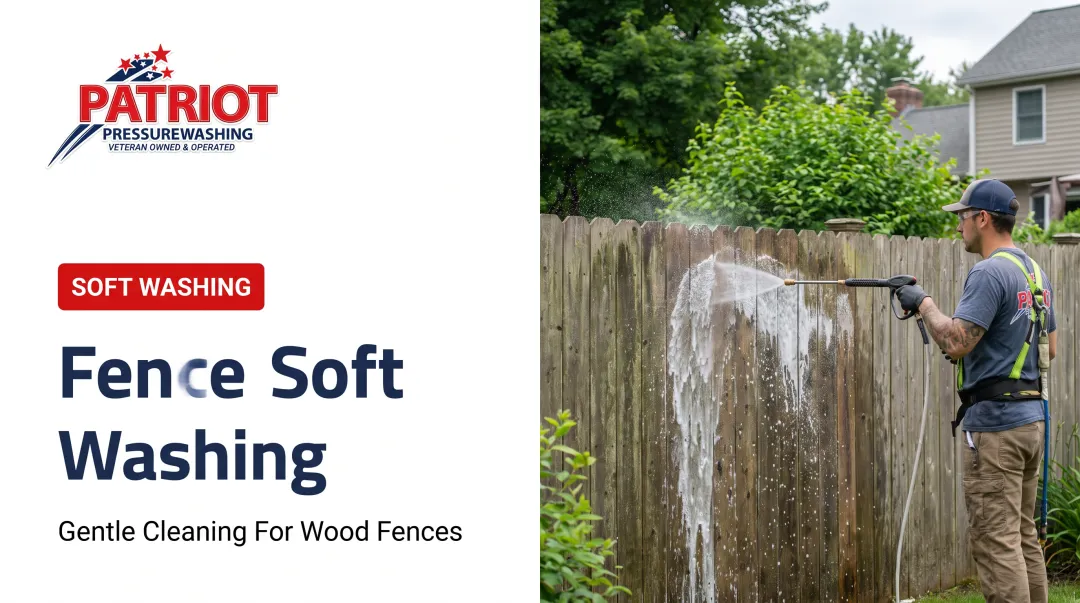
Soft washing is a cleaning technique that combines low water pressure with specialized cleaning solutions to safely remove organic stains from exterior surfaces. Rather than relying on force, the cleaning solution does the work, breaking down and killing algae, mold, mildew, and bacteria at the source.
The chemistry matters. A typical soft washing solution contains water, sodium hypochlorite (bleach), and surfactants. Surfactants reduce water's surface tension, allowing the mixture to spread across vertical surfaces, cling to siding or shingles, and penetrate into grooves where organic growth hides.
How the soft washing process works:
- Pre-wet the area: Lightly wet surrounding landscaping and the surface to be cleaned
- Apply the solution: Spray evenly across the surface with a low-pressure applicator
- Allow dwell time: Let it work 15–20 minutes on roofs (and similar surfaces), without drying fully, so contaminants break down
- Rinse thoroughly: Use low-pressure water to remove the solution, dead growth, and loosened dirt

The Asphalt Roofing Manufacturers Association (ARMA) specifically recommends this method for roof cleaning, advising a bleach-and-water treatment with gentle rinsing—and explicitly prohibiting power washers, which can damage shingles.
Ideal Applications for Soft Washing
Soft washing is the recommended or required method for these surfaces:
- Asphalt shingles – High pressure strips protective granules and can void warranties
- Vinyl siding – CertainTeed specifically warns against power washing its vinyl and polymer siding due to possible moisture intrusion, damage, or discoloration
- Cedar shake and wood siding – Pressure can splinter or erode wood fibers
- Stucco and painted exteriors – Force can crack stucco or strip paint
- Windows and trim – Gentle cleaning avoids seal damage
Hartford's climate creates ideal conditions for organic growth. The area experiences humid summers with average July temperatures around 74°F and consistent precipitation year-round, according to NOAA climate normals. This combination of warmth and moisture encourages:
- Black roof streaks – Caused by Gloeocapsa magma algae that thrives in damp, shaded areas
- Green mildew on siding – Especially on north-facing walls with limited sunlight
- Moss buildup – Common in consistently shaded sections of roofs and walls
Soft washing kills these organisms so they cannot bounce back as quickly, which keeps siding and roofs cleaner longer than pressure alone. For Hartford-area homes, Patriot Pressure Washing uses this method when low-pressure, solution-based cleaning is the safer fit for the surface.

What is Pressure Washing?
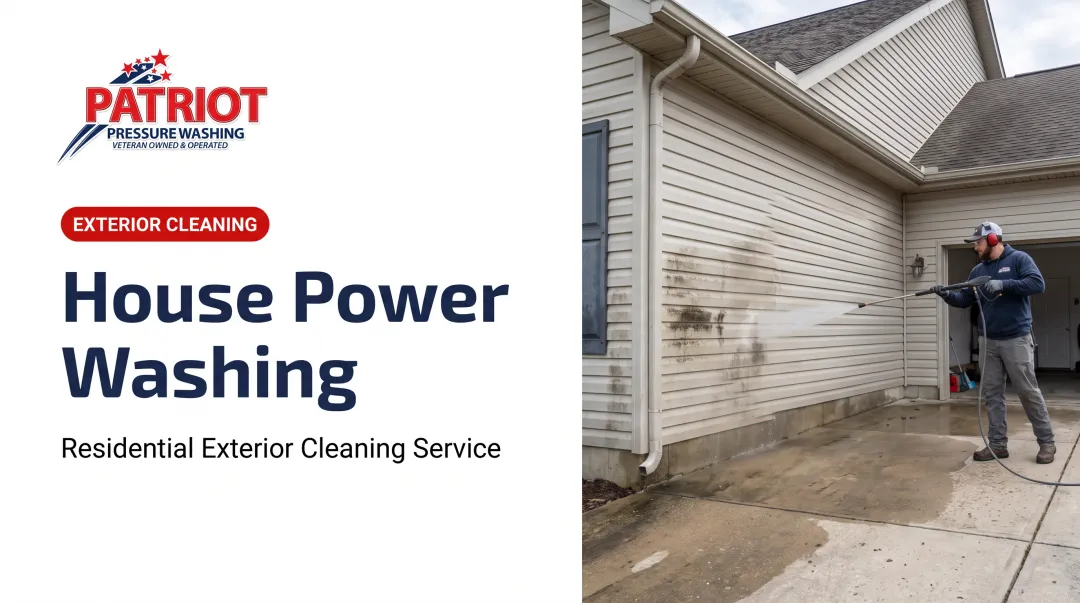
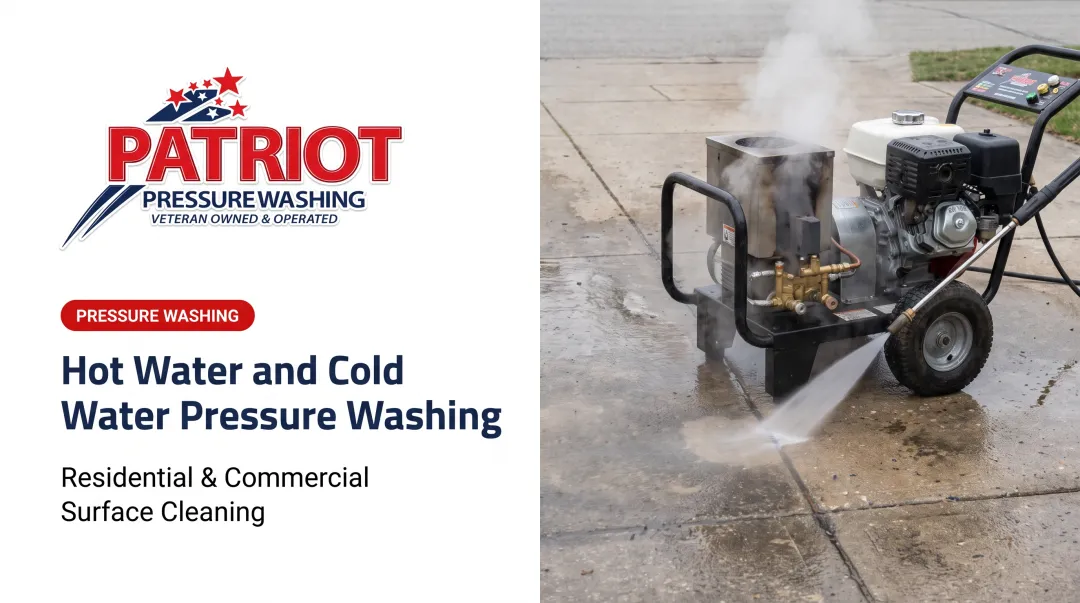
Pressure washing (also called power washing) uses a concentrated, high-pressure stream of water to physically remove dirt, grime, loose paint, and surface contaminants through mechanical force. A pressure washer pressurizes incoming water through an engine-powered pump, then channels it through a spray nozzle to create a focused stream.
The typical pressure washing process:
- Connect to a water source so the machine can draw and pressurize the water
- Select the nozzle and pressure—different tips change spray pattern and force
- Apply water in sweeping motions from a safe distance to avoid damage
- Adjust pressure, distance, and angle based on how the surface responds
Pressure washing can clean large, heavily soiled concrete areas much faster than soft washing because it relies on immediate mechanical force rather than chemical dwell time.

When Pressure Washing Makes Sense
Pressure washing works well on durable surfaces that can withstand the force:
- Concrete driveways and walkways — embedded dirt, tire marks, and grime
- Asphalt surfaces — oil stains and accumulated dirt
- Restoration projects — when paired with specialized stain removers
Important limitations and safety considerations:
Even durable materials have pressure limits. The Brick Industry Association (BIA) permits pressurized water on brick only conditionally: generally no more than 400 psi at the nozzle, a 25-50 degree fan tip, and at least 12 inches from the surface.
Higher pressures can erode mortar, damage brick faces, or force water into walls.
Improper use presents real risks:
- Forces water behind siding or into building cavities
- Strips paint from wood and metal
- Splinters or gouges wood decks
- Dislodges mortar from brick and stone
- Can cause serious injury from the high-pressure stream
Correct pressure, nozzle, distance, and angle for each surface are what separate a clean finish from costly damage.
Soft Washing vs Pressure Washing: Key Differences
Choosing between soft washing and pressure washing depends on the stain, the surface, and how much damage risk you can accept. Here’s how the methods compare on the points that matter most for house exteriors.
Effectiveness by Stain Type
Soft washing excels at organic growth:
- Algae, mold, mildew, and bacteria
- Moss and lichen
- Biological staining and discoloration
The chemical solution kills these organisms at the root, preventing rapid regrowth.
Pressure washing tackles inorganic stains:
- Oil and grease (especially on concrete)
- Rust stains
- Accumulated dirt and grime on hard surfaces
However, Brick Industry Association (BIA) guidance shows that even inorganic stains often require specialized removers, poultices, or solvents (not just pressure alone) for effective removal from masonry.
Safety and Damage Risk
Soft washing poses minimal risk to most surfaces when properly applied. The low pressure prevents physical damage, and the solution is formulated for the specific material being cleaned.
Pressure washing requires expert knowledge of:
- Appropriate pressure levels for each surface
- Correct nozzle selection and spray angle
- Safe distance from the surface
- How to recognize and avoid existing damage
The Brick Industry Association emphasizes that incorrect pressurized cleaning can irreparably damage any brick type, and the CDC warns that pressure washer spray can cause serious wounds.
Environmental Impact
Soft washing considerations:
- Uses controlled amounts of biodegradable cleaning solutions
- Requires runoff management to protect plants and prevent storm-drain contamination
- Even biodegradable cleaners must stay out of storm drains
UNC environmental health guidance stresses that wash water and cleaners must not enter storm drains.
Pressure washing considerations:
- Uses no chemicals on the surface
- Uses more water
- Can mobilize existing pollutants (oil, paint residue) in wash water
Both methods require responsible wastewater management. A reputable contractor should have a plan for protecting landscaping and controlling runoff.

Cost Considerations
Soft washing may cost slightly more per square foot because of specialized solutions and equipment. Longer-lasting results and lower damage risk often make it more cost-effective over time. Exact pricing depends on:
- Home size and surface area
- Severity and type of staining
- Surface materials and accessibility
- Regional labor rates
Request itemized quotes that document the specific surfaces, methods, and materials being used—and confirm that the contractor follows manufacturer guidelines to protect warranties.
Which Method is Right for Your Home?
The right method depends on three things: the surface you're cleaning, the type of stain, and how Hartford's climate treats that exterior. Work through each factor below before you commit to a approach.
Decision Framework: Surface Material
Choose soft washing if your home has:
- Vinyl, composite, or polymer siding
- Asphalt shingle roofing
- Wood siding or trim
- Stucco or EIFS exterior
- Painted surfaces
These materials need low-pressure cleaning to avoid damage and warranty issues. Before any work, identify your siding and roofing manufacturer and check their maintenance guidelines.
Pressure washing can fit (with caution) on:
- Concrete driveways and walkways
- Certain brick or stone (after confirming manufacturer limits)
- Asphalt driveways
Even these durable surfaces have pressure limits. Always request a test area before full application.
Surface type sets the safety boundary. Stain type tells you which process will actually clear the problem.
Decision Framework: Staining Type
Choose soft washing when you see:
- Green, black, or brown discoloration (algae, mildew, or moss)
- Streaking on roofs or siding
- Biological growth in shaded areas
- Gradual buildup over time
Pressure washing may fit better for:
- Oil stains on concrete
- Heavy dirt buildup on driveways
- Surface grime on masonry (within manufacturer limits)
Biological growth responds to detergent dwell time. Embedded dirt and oil on hardscape often need controlled mechanical force instead.
Hartford Climate Considerations
Connecticut keeps exteriors damp much of the year. According to NOAA, average monthly precipitation runs from about 3.28 inches in January to 4.52 inches in October, and warmer months favor algae and mildew.
Hartford homes usually need:
- Regular checks on north-facing and shaded walls
- Soft washing before algae sets in deep
- Extra attention near trees or beds that trap moisture
Shaded, tree-lined lots typically need service more often than homes in full sun. Match the method to both the material and the stain, start with a test area on hard surfaces, and get an on-site read when the mix of siding, roofing, and growth isn't clear-cut.

Real-World Example: Patriot Pressure Washing Approach
A Hartford homeowner contacted Patriot Pressure Washing after noticing black streaks on their roof and green discoloration on their vinyl siding. They were unsure which cleaning method to use and concerned about potential damage.
Eric, Patriot's owner and a military veteran with 19 years of service, assessed the situation during a free consultation. He identified the roof staining as Gloeocapsa magma algae and the siding discoloration as mildew. Both were organic growths that needed chemical treatment rather than mechanical force.
The team recommended soft washing to restore the home's appearance without damaging the asphalt shingles or forcing water behind the vinyl panels. With low-pressure equipment and surface-specific cleaning solutions, they treated the roof and siding in a single visit.
What the homeowner got:
- Years of organic buildup removed from roof and siding
- Exterior restored without shingle or panel damage
- Clear communication from estimate through final walkthrough
Eric's military discipline showed up in the details: transparent project agreements and a final walkthrough so the homeowner knew the job was done right.
If you're in Hartford, Cromwell, Glastonbury, or surrounding Connecticut communities, Patriot Pressure Washing offers free consultations and upfront project agreements. You know exactly what to expect before the work starts.
Conclusion
Choosing between soft washing and pressure washing comes down to matching the right technique to your surfaces, staining, and long-term maintenance goals.
Soft washing excels on delicate surfaces and organic growth, using chemistry to kill contaminants at the root for longer-lasting results. Pressure washing handles tough stains on durable surfaces, but only within manufacturer-approved limits and with experienced hands.
Start by identifying your materials and the type of staining you're dealing with. Then talk with a contractor who can explain why a specific method fits your home. Homeowners around Hartford can contact Patriot Pressure Washing for a clear recommendation tailored to their property.
Frequently Asked Questions
Should I soft wash or pressure wash?
Use soft washing for vinyl siding, asphalt roofs, stucco, and organic growth like algae or mildew. Pressure washing fits concrete driveways and some masonry only after you confirm manufacturer limits. When unsure, ask a pro so you avoid costly damage.
Is soft washing a house worth it?
Yes. Soft washing removes organic growth that can deteriorate surfaces and protects manufacturer warranties with approved low-pressure methods. It also keeps homes cleaner longer by killing contaminants instead of only clearing the surface layer.
What is the average cost to soft wash a house?
Soft washing costs vary based on home size, severity of staining, surface materials, and regional labor rates. Hartford-area pricing depends on your specific property conditions and accessibility. Request free estimates from qualified contractors who can provide itemized quotes reflecting the actual scope of work.
How often should a house be soft washed?
Most homes benefit from professional soft washing every 1-3 years, though frequency depends on your property's exposure to shade, moisture, and nearby vegetation. Homes in heavily shaded areas or surrounded by trees may need more frequent treatment. Inspect annually and clean when organic growth becomes visible.
Is soft washing safe for vinyl siding?
Yes. Soft washing is the recommended method for vinyl siding. CertainTeed and other major manufacturers warn that high pressure can cause moisture intrusion, panel damage, or discoloration, so low-pressure soft washing with the right solutions is the safer choice.
What is an exterior soft wash?
An exterior soft wash is a professional cleaning service that uses low-pressure equipment and specialized cleaning solutions to safely remove dirt, algae, mold, and mildew from your home's siding, roof, and other delicate outdoor surfaces without the damage risk associated with high-pressure washing.