
Many homeowners assume a metal roof means "set it and forget it." In reality, algae, mold, oxidation, and debris buildup can chip away at that protective coating if you ignore it long enough. This guide covers when to clean, what you'll need, the exact steps, what changes the outcome, and the mistakes that can quietly void your warranty.
TL;DR
- Light annual cleaning plus a deeper clean every 3-5 years, depending on climate and tree coverage
- Soft washing with mild detergent is safe; high pressure and abrasives can damage coatings and void warranties
- Match your method to coating type, growth type, and local conditions
- Choose professional soft washing for multi-story homes or warranty-sensitive roofs
How to Clean a Metal Roof Safely
Step 1: Inspect and Prepare the Roof
Start from the ground. Walk the property and look at the roof from a few angles for staining, moss, or discoloration you might miss from directly below.
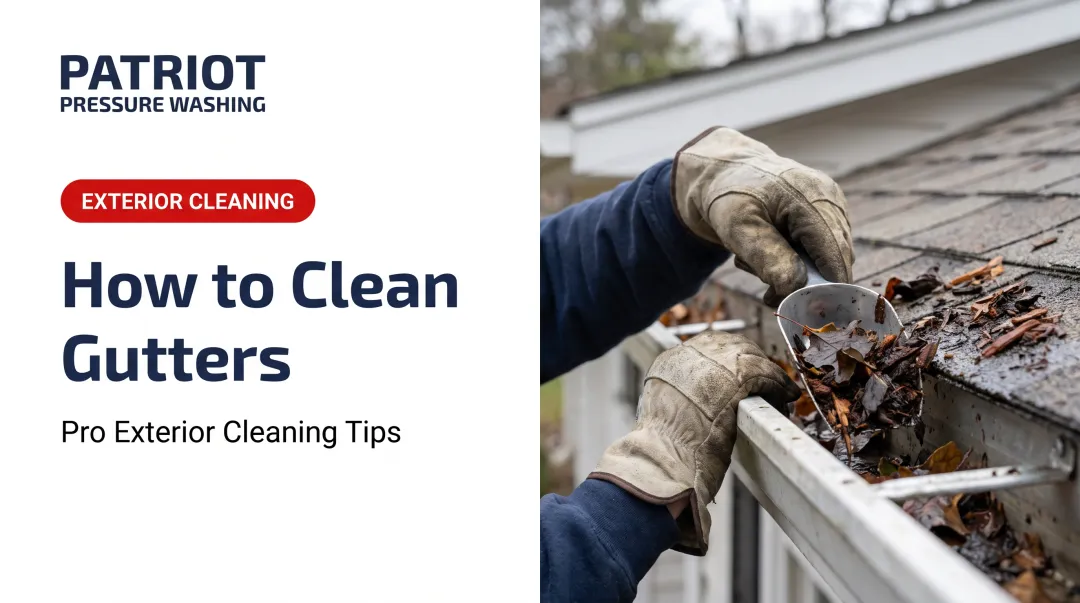
- Clear gutters and downspouts before you begin
- Remove loose branches or debris that could scratch panels during cleaning
- Check your manufacturer's documentation for approved cleaning methods
Step 2: Choose the Right Cleaning Solution
For light dirt, plain water often does the job. For moderate grime, McElroy Metal recommends mild detergent at roughly 1/4 cup per gallon of water. For algae or mold, a biodegradable soft wash solution works better.
Before applying anything to the whole roof:
- Confirm the cleaner is safe for your coating type (PVDF, SMP, or acrylic)
- Test it on a small, hidden section first
- Never assume one product works on every coating. Sherwin-Williams' cleaning guidance differs by coating type
Step 3: Apply the Solution Using Low-Pressure Methods
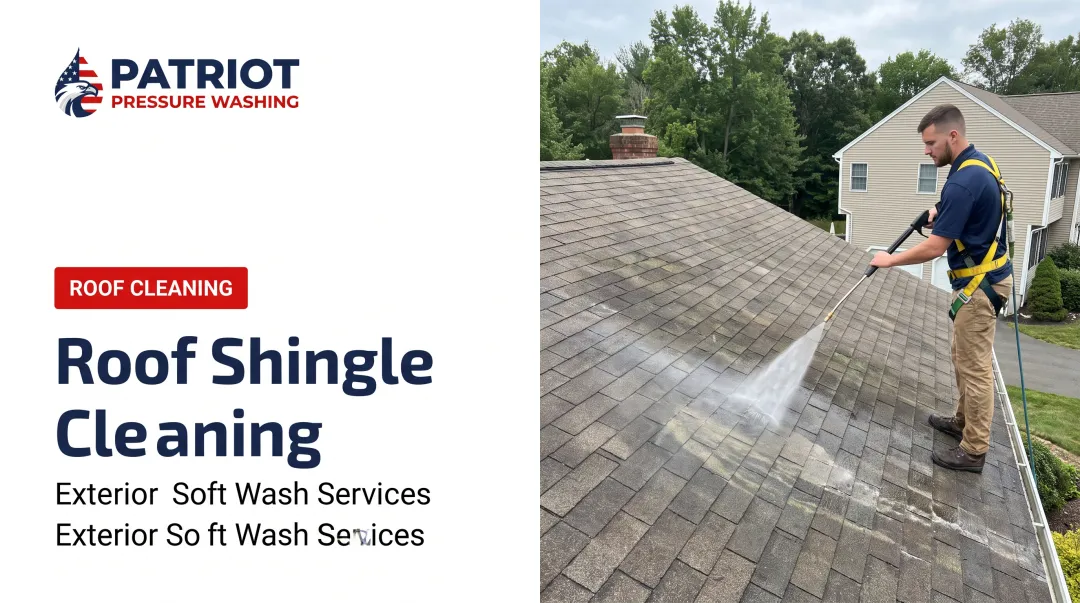
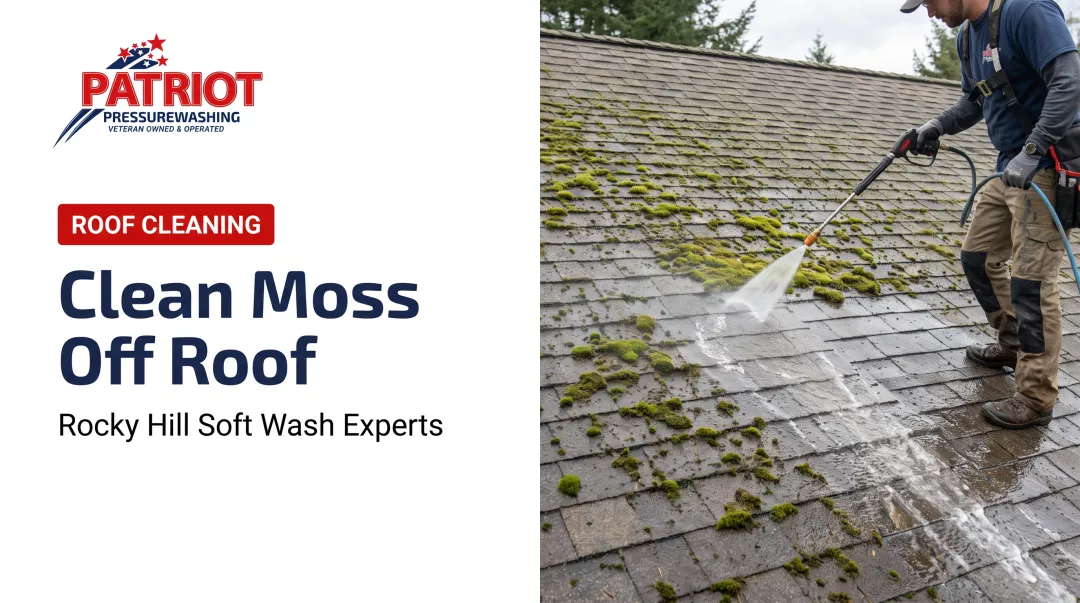
Soft washing uses a low-pressure spray with the right cleaning agent. It's the industry standard for metal roofs and a safer alternative to power washing.
A few practical notes:
- Work on an overcast day; direct sun causes the solution to evaporate before it can work, leading to streaking
- Use nonabrasive sponges, soft-bristle brushes, or hose-end sprayers only
- Skip anything abrasive, even if it seems like it'll "cut through" grime faster
Step 4: Rinse Thoroughly and Inspect Results
Let the solution sit for 5 to 10 minutes, then rinse top to bottom with plain water. Leftover residue can streak or dull the finish over time.
Once dry, inspect for anything the wash didn't fix: rust spots, chalking, or stubborn stains that need spot treatment. Roof access and ladder work are where many DIY jobs stall. Patriot Pressure Washing handles safe access and full rinsing for homeowners across the Hartford, CT area.

When Should You Clean a Metal Roof?
Not every roof needs the same attention. A sun-exposed roof with no nearby trees behaves very differently than one tucked under a canopy.
General guidelines:
- Clean lightly once a year to remove dust, pollen, and leaf debris
- Deep clean every 3-5 years, or sooner after heavy pollen seasons, storms, or visible algae
- Inspect shaded, humid, or coastal Connecticut roofs more often: moisture and limited sunlight feed mildew
Connecticut's climate speeds that growth. NOAA describes the state as having warm, humid summers with abundant, variable precipitation — exactly the conditions that let algae and mildew take hold on shaded roof sections.

What You Need Before Cleaning a Metal Roof
Preparation prevents damage and wasted effort. Skipping this step is how roofs get scratched or how people get hurt.
Equipment and Tool Requirements
- Soft-bristle brushes and non-abrasive sponges
- Low-pressure hose attachments
- Garden pump sprayer for even, controlled application
- OSHA-compliant ladders with stabilizers
Cleaning Solution Requirements
- Mild detergents for general dirt and dust
- Diluted bleach or mold-specific solutions for algae and mildew (product-specific — check your coating first)
- pH-neutral cleaners rated safe for coated or painted metal panels
Safety and Compliance Readiness
- Fall protection gear and non-slip footwear
- A second person present at all times
- Confirmation that your chosen products won't void the roof warranty
OSHA's construction standard requires fall protection for anyone working 6 feet or higher above a lower level. That threshold applies to a lot of residential roofs.
Key Factors That Affect Metal Roof Cleaning Results
Results depend on four things: coating type, what's growing on the panels, water pressure and method, and local climate exposure.
Roof Coating Type
PVDF, SMP, and acrylic coatings don't all tolerate the same solvents. Using the wrong cleaner can strip a protective finish and cause premature fading you can't undo.
Type of Buildup
Algae, rust, oxidation, and chalking each need different treatment:
- Algae/mold — bleach-based solution, diluted correctly
- Rust — mild acid treatment, spot-applied only
- Oxidation — specialized cleaners that brighten panels without stripping the finish
- Chalking — often requires manufacturer-approved products
Mismatched treatment can leave permanent stains or, worse, trigger corrosion.

Water Pressure Used
High-pressure washers can force water under seams and strip coatings entirely. Soft washing preserves the panel finish and keeps water outside the roof, not inside it.
Climate and Exposure
Shaded, humid Connecticut properties develop algae faster than sun-exposed roofs. This is what determines your actual cleaning frequency, not a generic calendar reminder.
Common Mistakes When Cleaning a Metal Roof
These four mistakes cause most of the damage we see:
- Using high-pressure power washers — can damage seams and void warranties outright
- Applying abrasive tools — steel wool, wire brushes, and sandpaper permanently scratch protective coatings
- Skipping the test patch — using a new cleaning solution on the full roof without testing first is a gamble
- Ignoring safety precautions — working without fall protection or with unstable ladder placement leads to preventable accidents
Alternatives to DIY Metal Roof Cleaning
DIY isn't always the safest or most effective route, especially on steep or multi-story roofs.
Hiring a Professional Soft Washing Service
Choose this route when the roof is tall, algae is stubborn, or warranty compliance matters. You pay more upfront, but you get safer, more thorough results.
Patriot Pressure Washing, a veteran-owned company serving Hartford and surrounding communities, uses professional soft-washing equipment and eco-friendly solutions matched to the roof material. The process is straightforward:
- Request a quote
- Schedule a visit
- Get the roof cleaned in one session
- Walk through the results together

Manufacturer-Recommended Solvent Cleaning
This option suits tough stains like tree sap, tar, or grease that detergent can't touch. Flammable or toxic chemicals require careful handling and strict label compliance.
Preventive Maintenance
Trimming trees and clearing gutters won't remove existing stains. It does cut how often you'll need a deep clean.
Conclusion
Cleaning a metal roof is simple in principle. Wrong products, high pressure, or skipped manufacturer guidelines turn a routine maintenance task into an expensive mistake. For homeowners in the Hartford, CT area who want the job done right the first time, Patriot Pressure Washing uses professional soft washing for safe, thorough cleaning and long-term roof protection.
Frequently Asked Questions
How much does it cost to power wash a metal roof?
Cost varies by roof size and condition, but power washing isn't recommended for metal roofs at all. Soft washing is the safer method, and pricing depends on your roof's specific needs . Contact Patriot Pressure Washing for a free estimate tailored to your roof.
Can you soft wash a metal roof?
Yes. Soft washing is the recommended method for metal roofs because it uses low pressure paired with the right cleaning agent, avoiding coating damage that power washing causes.
Should metal roofs be cleaned?
Yes. Regular cleaning extends the roof's lifespan, keeps you compliant with manufacturer warranty terms, and preserves both curb appeal and energy efficiency.
Can I use bleach to clean my metal roof?
A diluted bleach solution can treat algae and mold, but it needs careful handling and thorough rinsing to protect your coating and nearby plants. Check your manufacturer's guidance first.
What is the best cleaner for metal roof oxidation?
Mild abrasive-free cleaners handle light oxidation well. For severe cases, manufacturer-approved acid-based solutions are the standard, applied only as a spot treatment.