
Here's where things get confusing: many homeowners assume "power washing" and "house washing" are the same service. They're not. Using the wrong method on the wrong surface can strip paint, force water behind siding, or damage roofing.
This guide breaks down the differences, the benefits of doing it right, and how Patriot Pressure Washing helps homeowners across Hartford, West Hartford, Glastonbury, and surrounding towns get their exteriors clean without the risk.
Key Takeaways
- Soft washing (low pressure + solutions) cleans siding; power washing suits concrete and other durable surfaces
- Mismatching method to surface can cause costly, sometimes irreversible damage
- Annual exterior cleaning protects home value and catches moisture problems early
- Patriot Pressure Washing brings military discipline to every Hartford-area job
What Is the Difference Between House Washing and Power Washing?
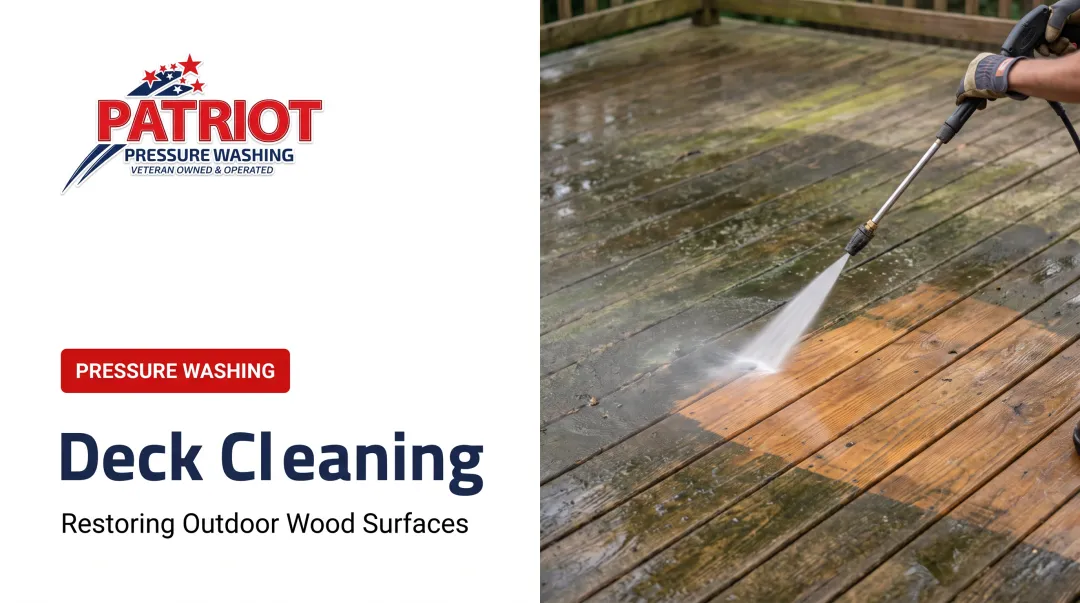
Power washing uses high-pressure, often heated, water. It's built for hard, durable surfaces like driveways, sidewalks, and patios. The heat helps break down grease, oil, and heavy grime that plain water pressure can't touch.
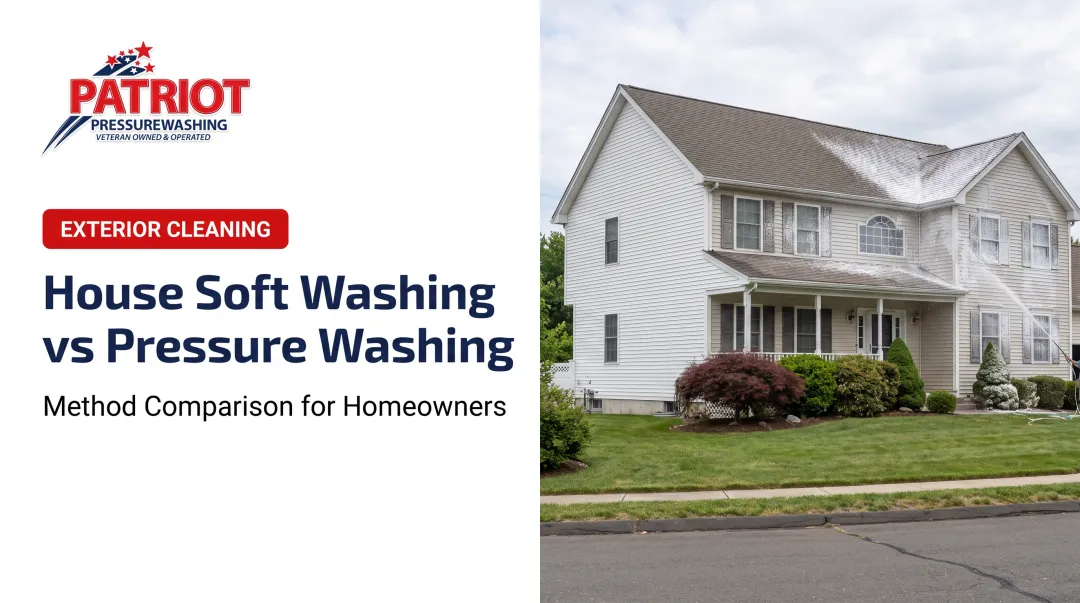
House washing (also called soft washing) is a low-pressure method, typically in the 60-300 PSI range, paired with a cleaning solution. Instead of blasting away dirt with force, it uses chemistry to break down algae, mold, and mildew. That's what makes it safe for siding, stucco, and trim.
Why does this matter? Because high pressure on the wrong surface causes real damage:
- Stripped paint on wood or vinyl siding
- **Water forced behind siding panels**, leading to hidden moisture and rot
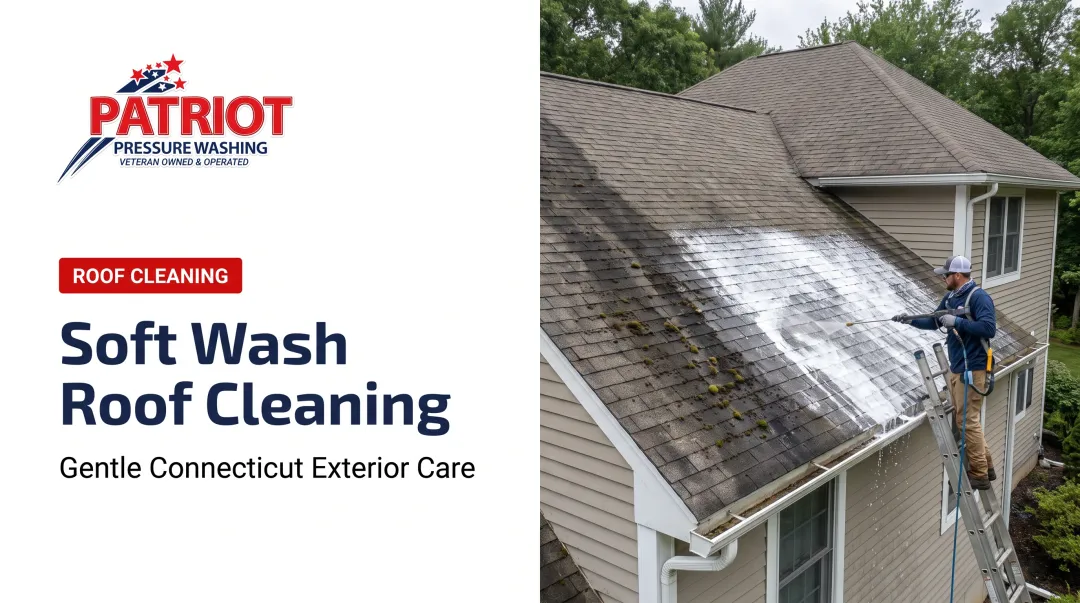
- Granule loss on asphalt shingles, which shortens roof lifespan
The Asphalt Roofing Manufacturers Association puts it bluntly: never use a pressure washer on an asphalt-shingle roof, warning it can cause granule loss and premature roof failure. GAF and CertainTeed, two of the largest shingle manufacturers, echo the same warning.
Most full-service companies, including Patriot Pressure Washing, use both methods depending on the surface. Here's the quick version:
| Surface Type | Method |
|---|---|
| Siding, trim, soffits, fascia | Soft wash |
| Concrete, brick, pavers | Power wash |
| Roofs (asphalt shingle) | Low-pressure only |

Benefits of Professional House Power Washing
A clean exterior protects your home as much as it improves how it looks. Professional house power washing delivers several practical payoffs beyond a fresher facade.
- Curb appeal that shows: According to the National Association of Realtors' Remodeling Impact Report, 97% of real estate agents say curb appeal matters when attracting buyers, and 92% recommend improving it before listing.
- Longer-lasting surfaces: Algae and mold don't just sit on paint, siding, and hardscapes. Left alone, they eat into those materials and turn a cleaning job into a repair job.
- Fewer allergy triggers near entry points: Mold and mildew by windows and doors can spark reactions. The CDC notes that damp, moldy environments can cause coughing, wheezing, and skin irritation, especially for people with asthma or mold allergies.
- Earlier problem detection: A regular washing schedule helps you spot discoloration, staining, or drainage issues before they become a $5,000 repair bill.

Whether you're preparing to sell or simply want a home that looks cared for, exterior cleaning is one of the highest-visibility improvements you can make.
Which Surfaces Need Power Washing vs. Soft Washing?
Surfaces Best Suited for Power Washing
Driveways, sidewalks, patios, and walkways handle high pressure well because they're built from dense, weather-resistant materials. These areas collect:
- Tire marks and oil stains
- Algae and moss in shaded spots
- General foot-traffic grime
Concrete surfaces respond especially well to stronger pressure and heated water for stubborn stains like grease or gum.
Surfaces That Require Soft Washing
Vinyl and wood siding, painted trim, stucco, and asphalt roofing all need a gentler touch. High pressure can:
- Lift shingles
- Strip paint
- Force moisture behind siding and into wall openings
Soft washing uses biodegradable cleaning agents to break down grime chemically rather than blasting it off. That matters most on stucco, where openings around windows and doors make water intrusion a real risk.

Why DIY Power Washing Often Backfires
Renting a pressure washer for the weekend sounds simple. In practice, it's one of the more common ways homeowners damage their own property.
Common DIY mistakes:
- Using the wrong nozzle angle or pressure setting for the surface, leading to gouged wood or stripped paint
- Directing spray upward under shingles, which can lift or warp them
- Getting chemical dilution wrong, which can kill landscaping or leave streaks behind
Physical safety is another risk. Ladder work, roof edges, and high-pressure equipment aren't things most homeowners handle regularly.
Consumer Reports estimated 6,057 emergency room visits related to pressure washers in a single recent year. That's not a small number for a "simple" weekend project.
Rented equipment also lacks the fine control trained technicians use to match pressure and solution to each surface.
Choosing the Right Power Washing Company in Hartford, CT
Not every exterior cleaning company operates the same way. Before hiring one, look for:
- Clear, upfront pricing — no surprise charges after the job is done
- Proof of insurance — confirm coverage directly with the provider
- A written scope of work agreed on before the job starts
The Better Business Bureau recommends verifying licenses and insurance and getting a signed agreement before work begins.
Those same standards shape how Patriot Pressure Washing works with homeowners. Founded in 2016 by Eric, a combat-disabled veteran with 19 years of military service and three deployments, the company runs on clear communication, attention to detail, and getting the job right the first time.

As a Disabled Veteran Owned Business, Patriot applies that military mindset on every project:
- Matches soft washing or power washing to the surface
- Walks clients through a written estimate before starting
- Finishes with a walkthrough to confirm the results
The company backs its work with a 100% Customer Satisfaction Guarantee. It serves homeowners across Hartford, West Hartford, Glastonbury, Manchester, Rocky Hill, Cromwell, Middletown, and Farmington.
Frequently Asked Questions
What is the difference between house washing and power washing?
House washing (soft washing) uses low pressure with cleaning solutions for siding and delicate surfaces. Power washing uses high pressure for tough, durable surfaces like concrete and brick.
How often should I have my house power washed?
Most Hartford-area homes benefit from a professional cleaning once a year. Homes with heavy tree cover or shade may need service more often due to faster algae and mildew buildup.
Can power washing damage my home's siding?
Yes. High pressure can force water behind siding panels or strip paint. That's why soft washing is the recommended method for most siding types.
Is it safe to power wash my roof?
No. Traditional high-pressure washing isn't recommended for asphalt shingles, since it can strip protective granules. Low-pressure soft washing is the safer approach.
How much does professional house washing cost?
Pricing depends on home size, surface type, and buildup level. Requesting a personalized quote is the best way to get an accurate estimate.
What's the best time of year to power wash a house?
Spring and fall work well in Connecticut. Both seasons remove seasonal buildup and prep surfaces before extreme heat or winter weather sets in.