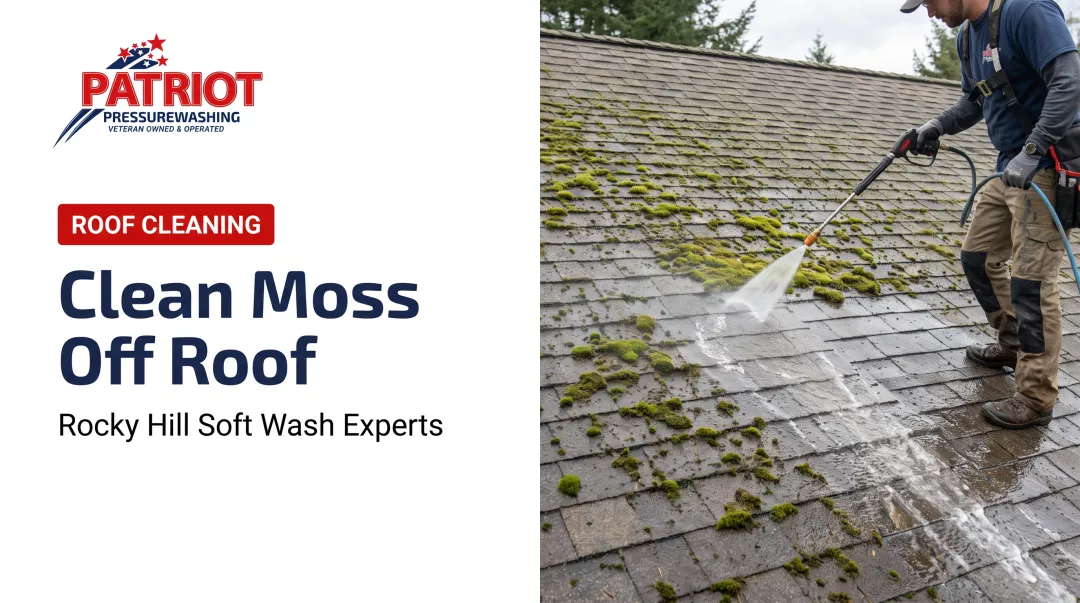

Here's the problem: not all cleaning methods are created equal. Pressure washing can strip protective granules right off your shingles, leading to premature roof failure. The method, the roof material, and the technique all matter.
This guide covers the safe way to clean shingles, when to do it, what you'll need, and the mistakes that cause the most damage.
Key Takeaways
- Soft washing, not high-pressure washing, is the safest way to clean asphalt shingles
- Roof cleaning frequency depends on visible growth, roof age, and local climate—not a fixed calendar
- Water pressure, solution strength, and dwell time all directly affect your results
- Pressure washers and undiluted chlorine bleach cause most preventable roof damage
- Professional soft washing offers stronger warranty protection than DIY pressure washing attempts
How to Clean Roof Shingles Safely
Step 1: Inspect and Prepare the Roof
Before touching a hose, walk the perimeter of your house or grab a pair of binoculars. Look for moss clusters, algae streaks, and any shingles that look loose, curled, or cracked.
Then handle the prep work:
- Clear overhanging branches that trap moisture and feed organic growth
- Clean out gutters so debris doesn't stall runoff during rinsing
- Cover landscaping, AC units, and outdoor fixtures to protect them from chemical runoff
Step 2: Choose and Mix the Right Cleaning Solution
The Asphalt Roofing Manufacturers Association (ARMA) recommends a 50:50 mixture of laundry-strength liquid chlorine bleach and water as an effective cleaning solution for algae and moss (ARMA, 2012). GAF offers a gentler ratio: roughly 1 cup of liquid chlorine bleach per 4 gallons of water.
Oxygen bleach-based cleaners are often preferred by manufacturers like Atlas, since straight chlorine bleach can harm vegetation and building materials. Whichever solution you choose:
- Follow the manufacturer's mixing instructions exactly
- Test on a small, hidden shingle area first
- Never let the solution dry on the roof before rinsing
Step 3: Apply the Solution Using Low-Pressure Soft Washing
This is where most DIY attempts go wrong. Never use a power washer, brush, or broom on shingles. ARMA is direct about this: scrubbing friction loosens and removes the granules that protect your roof from UV damage and water intrusion.
Instead:
- Apply the solution with a low-pressure sprayer, working top-down in sections
- Let it dwell for 15-20 minutes (per ARMA guidance) so it can break down moss and algae
- Watch the surface during the dwell time and re-wet any area that starts to dry

Step 4: Rinse and Inspect Post-Cleaning
Rinse thoroughly with low-pressure water—ARMA describes this as "gently spraying" the surface, not blasting it. High-pressure rinsing causes the same granule loss as pressure washing the whole roof.
Once you've rinsed:
- Re-inspect for missed spots or loosened shingles
- Check gutters and downspouts for excess granule buildup
- Plan a second treatment if growth remains in shaded areas
Patriot Pressure Washing uses this same low-pressure soft-wash process for homeowners in Hartford and surrounding CT communities, matching the method to each roof's material before any solution is applied.

When Should You Clean Your Roof Shingles?
There's no universal calendar rule here. Timing depends on visible growth, your roof's age, and how much shade and moisture your property holds onto.
Common triggers for cleaning:
- Moss clumps or algae streaks (black or green discoloration, often on north-facing slopes)
- Home sale prep, when curb appeal and buyer inspections matter
- Scheduled roof checks during regular home maintenance
Spring and early fall are the best cleaning windows—moderate temperatures and faster drying cut the risk of moisture lingering under granules. GAF also flags spring as a smart time to inspect for algae, moss, and overall roof condition.
Proceed with extra caution (or call a pro) if you have:
- Aging or brittle shingles that can crack under foot traffic or harsh methods
- A steep pitch that raises fall risk and limits safe DIY access
- A roof near the end of its lifespan, where cleaning may expose rather than fix wear
What You Need Before Cleaning Roof Shingles
Safe, effective cleaning comes down to two things: the right equipment and honest self-assessment about what you can handle.
Equipment Requirements
You'll need:
- A soft wash system or low-pressure sprayer
- Extension wands to reach the roof from the ground when possible
- Non-slip safety gear if you're going on the roof
Cleaning Solutions
Stick with roof-safe, shingle-compatible cleaners. Avoid harsh, undiluted chlorine bleach: it degrades granules and can discolor shingles over time.
Safety Readiness
OSHA requires fall protection for anyone working on unprotected edges 6 feet or more above ground (OSHA 29 CFR 1926.501). Ladders must sit on stable, level ground unless secured.
The Asphalt Roofing Manufacturers Association (ARMA) also warns that wet, treated roofs become slippery and hazardous. That's one more reason many homeowners hand this job to a professional instead.
Key Factors That Affect Roof Shingle Cleaning Results
Your outcome depends on a handful of controllable variables. Get these wrong, and you risk damage instead of a clean roof.
- Water pressure: High PSI strips protective granules and can void manufacturer warranties. Low pressure cleans growth off without chewing up the shingle surface.
- Solution strength: Harsh, undiluted chemicals discolor and weaken shingles. Roof-specific formulas lift moss without degrading the material underneath.
- Dwell time: Growth survives if the solution does not sit long enough; leave it too long and certain coatings can suffer. Stick to manufacturer timing—typically 15–20 minutes.
- Roof slope and material: Steeper pitches and fragile surfaces like slate or wood shake need extra care. CertainTeed notes that slate can crack when walked on, so match the method to the material to avoid cracked tiles or lifted shingles.

Common Mistakes When Cleaning Roof Shingles
Most avoidable roof damage comes from a few common errors:
- Using a pressure washer directly on shingles instead of soft washing, which ARMA links to granule loss and premature roof failure
- Applying undiluted chlorine bleach, which discolors shingles and accelerates granule breakdown
- Walking on the roof unnecessarily, which can crack brittle or aging shingles under uneven weight
- Ignoring early moss growth, which allows deeper moisture damage into the roof deck
Alternatives to DIY Roof Shingle Cleaning
DIY isn't always the safest or most cost-effective route, especially on steep roofs or with heavy buildup.
Hiring a Professional Soft Washing Service
Hire a pro when you are dealing with:
- Steep or multi-story roofs that raise fall risk
- Heavy moss or algae across large sections
- No harnesses, roof anchors, or other safety gear
Upfront cost is higher, but you cut the chance of shingle damage and avoid DIY mistakes that can void manufacturer warranties.
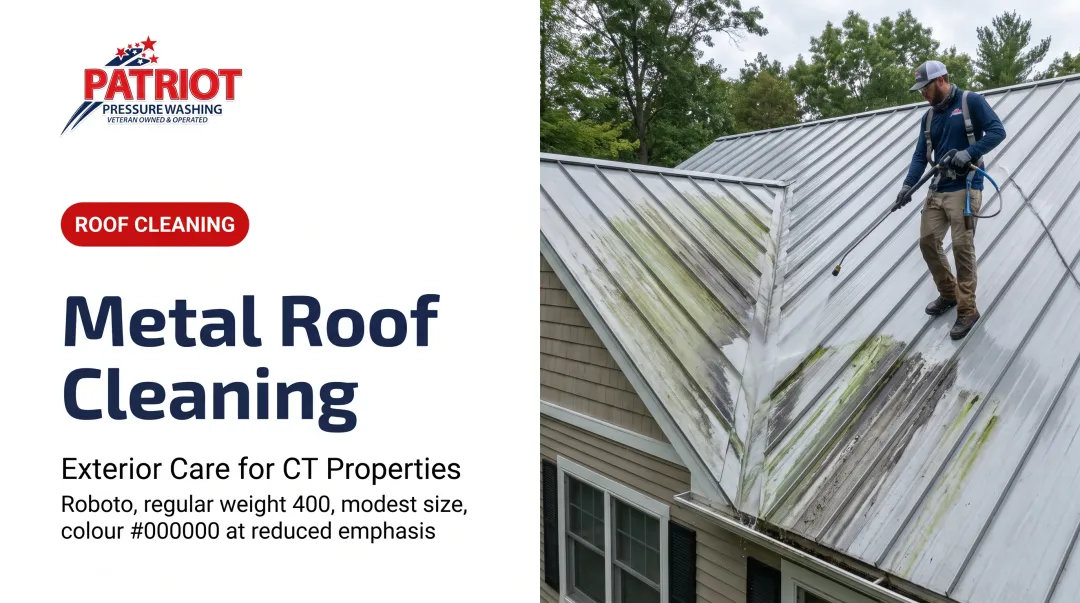
Patriot Pressure Washing, serving Hartford and nearby communities such as Manchester and Middletown, CT, treats roof cleaning as a dedicated service, not a house-washing add-on. Technicians match solution strength and application method to the roof material (asphalt, slate, tile, metal, or cedar shake), then walk the finished job with you to confirm every section is clean.

Preventative Chemical Treatments (Zinc/Copper Strips)
These strips can slow future moss regrowth between cleanings. However, Oregon State University Extension notes they don't remove existing buildup, and improperly installed strips can actually cause leaks.
Manual Removal (Brushing/Raking)
This works fine for small, easily reachable patches with minimal growth. It's time-consuming, though, and risks physical shingle damage if you're not gentle.
Final Thoughts
Soft washing, not pressure washing, is the safest way to clean roof shingles and protect their lifespan. Most damage traces back to poor prep, the wrong solution, or too much pressure—not the act of cleaning itself.
Whether you tackle it yourself with care or bring in a professional, the right approach balances a clean roof with long-term protection. For Hartford-area homeowners unsure where that line sits, a quick conversation with a local soft washing team can save you from an expensive mistake.
Frequently Asked Questions
How much should it cost to clean a roof?
Cost varies by roof size, pitch, and how severe the growth is. National averages run from roughly $295 to $623, but getting a local, job-specific quote gives you a far more accurate number.
What is the best way to clean a roof?
Low-pressure soft washing paired with a roof-safe cleaning solution is the safest and most effective method for removing moss and algae without damaging shingles.
What is the best time of year to clean a roof?
Spring and fall offer the best drying conditions and moderate temperatures, making them ideal windows for roof cleaning.
Is it a good idea to pressure wash your roof?
Generally, no. High-pressure washing strips protective granules and can lead to premature shingle failure, according to ARMA guidance.
Is it worth cleaning moss off the roof?
Yes. Moss retains moisture that can cause leaks and rot over time, and severe buildup can lead to lateral water movement beneath your shingles.
Will bleach ruin roof shingles?
Undiluted chlorine bleach can discolor shingles and accelerate granule loss. Diluted, roof-safe cleaners mixed to manufacturer specifications are the safer choice.