
But it still collects grime, algae, and mildew, especially in humid climates like Connecticut's.
Pressure washing seems straightforward: point, spray, done. In reality, too much force or the wrong angle can drive water behind the panels, crack the material, or leave you dealing with hidden mold. This guide walks through the exact steps, the equipment you need, common mistakes, and when it's smarter to call a pro like Patriot Pressure Washing.
TL;DR
- Wash vinyl siding at 1,300-1,600 PSI with a wide-angle nozzle (25-40 degrees)
- Apply soap bottom to top, rinse top to bottom
- Never spray upward into siding laps—water forced behind panels causes hidden damage
- Use a siding-safe detergent (5-10 minute dwell); skip bleach on aluminum trim
- Hire a pro for multi-story, heavily soiled, or damaged siding
How to Pressure Wash Vinyl Siding
Step 1: Prepare the Area and Home
Before you turn on the machine, walk the perimeter of your house.
- Move patio furniture, cover landscaping with tarps, and close all windows and doors
- Tape over exterior outlets and light fixtures to keep water out
- Inspect siding for existing cracks, gaps, or loose panels that could let water sneak inside
- Confirm your pressure washer has a wide-angle tip (25-40 degrees) and a detergent injector
Skipping the inspection step is a common shortcut that backfires. A loose panel you didn't notice becomes an open door for water once you start spraying.

Step 2: Choose the Right Pressure and Detergent
Manufacturer guidance on PSI varies. Mastic/Ply Gem's official care instructions recommend a 40-degree tip at 1,500-2,400 PSI held straight at eye level. CertainTeed advises against power washing vinyl siding altogether and favors a hose-connected wash instead.
Our recommendation: stay conservative at 1,300-1,600 PSI. Higher settings risk etching or cracking panels, particularly on older siding that's already brittle from sun exposure.
For detergent:
- Choose a siding-specific cleaner labeled safe for pressure washers
- Avoid undiluted bleach, ammonia, or degreasers
- Test spray a small, hidden section first before committing to the whole wall
Step 3: Apply Detergent and Let It Dwell
Start at the bottom of the wall and work upward in horizontal, overlapping strokes. This prevents streaking, since soap running down over a dry, unwashed section leaves visible lines.
Keep these details in mind:
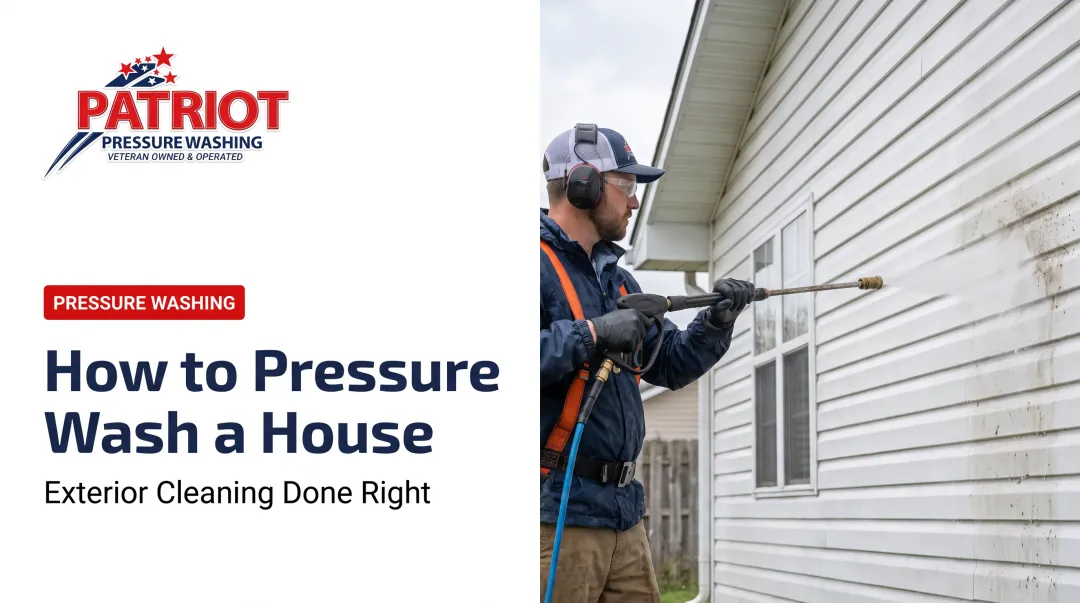
- Hold the nozzle 3-5 feet from the surface, angled slightly downward
- Let the solution dwell for 5-10 minutes to break down mildew and grime
- Watch the sun. Detergent that dries before rinsing leaves spots that are harder to remove
Step 4: Rinse from Top to Bottom
Once dwell time is up, switch to clean water and reverse direction: rinse from the top down.
- Work in smooth, overlapping passes moving downward
- Keep the spray angled down, never up into the siding laps
- Walk the entire wall afterward to check for missed soap or streaking
The upward-angle rule is worth repeating. It's the single most common cause of hidden water damage behind vinyl panels.
When Should You Pressure Wash Vinyl Siding?
Pressure washing isn't the right call for every home. Use it when access is safe and the siding is only moderately dirty.
Good candidates:
- Single-story or easily accessible homes
- Moderate dirt, algae, or mildew buildup
- Siding that's sound, with no existing cracks
Risky situations:
- Multi-story homes requiring extension wands or ladder work
- Siding with cracks, loose panels, or old caulking near windows
- Deep staining or extensive mold coverage
CertainTeed's guidance on when to call a contractor flags structural damage, widespread warping, or exposed insulation as signs DIY cleaning isn't enough.
If your home falls into any of the riskier categories above, Patriot Pressure Washing can handle the job with controlled low-pressure and soft-washing methods that are gentler on older or fragile vinyl.
What You Need Before Pressure Washing Vinyl Siding
Prep and gear determine whether the job goes smoothly or turns into a repair project.
Equipment Requirements
- Pressure washer capable of 1,300-1,600 PSI
- Wide-angle nozzle tip (25-40 degrees)
- Extension or telescoping wand for two-story sections
Materials
- Siding-safe detergent
- Soft-bristle brush for stubborn spots
- Tarps for landscaping protection
Safety Readiness
- Non-slip, closed-toe shoes
- Safety goggles
- Work gloves for grip and hand protection
Never operate a pressure washer from a ladder. Use an extension wand instead. That rule isn't optional advice. The combined force of a pressure washer's kickback and standing on an unstable ladder is a recipe for a fall.

Common Mistakes When Pressure Washing Vinyl Siding
Most siding damage traces back to a handful of repeat offenders:
- Applying more than 1,600–2,000 PSI, especially with a narrow nozzle, which can crack or gouge panels
- Spraying upward into the laps, which forces water behind the siding and invites hidden mold
- Holding the nozzle in one spot or standing too close, which leaves streaks or causes physical damage
- Using bleach-based cleaners that discolor vinyl and damage nearby aluminum trim
- Climbing a ladder with the washer instead of an extension wand, which raises fall and control risks
Troubleshooting Issues While Pressure Washing Vinyl Siding
Even careful DIYers hit snags. Here's how to diagnose the most common ones.
Streaks left after rinsing Usually from rinsing bottom to top, or letting detergent dry before you rinse. Always rinse top to bottom in overlapping passes, and don't let soap sit too long in direct sun.
Water behind siding or loose panels afterward Spraying too close or angling the nozzle upward into the laps pushes water behind the panels. Recheck your distance and keep the spray angled down. If moisture seems trapped, call a professional to inspect before mold sets in.
Stubborn mold or algae won't lift Short dwell time or over-diluted detergent is the usual culprit. Give the cleaner 5–10 minutes to work, and confirm concentration on the product label.
When DIY fixes stop working, a pro soft wash is safer for vinyl than turning up the pressure.
Alternatives to Pressure Washing Vinyl Siding
Pressure washing isn't your only option, and for some homes it isn't even the best one.
Soft Washing
Soft washing uses low pressure combined with a cleaning solution and a longer dwell time. It's the safer route for older or fragile siding because it lowers the risk of forcing water behind panels.
Patriot Pressure Washing handles most residential siding jobs this way, using specialized solutions to lift mold, mildew, and algae without high pressure.
Manual Hand Washing
A garden hose, soft-bristle brush, and dish soap solution handle lightly soiled siding or quick touch-ups between deeper cleans. CertainTeed's own care instructions recommend exactly this combination for routine maintenance.
Hiring a Professional Pressure Washing Service
Trained technicians bring calibrated equipment and experience that's hard to replicate with a rented machine. Patriot Pressure Washing has cleaned vinyl-sided homes with peaks that homeowners hadn't been able to reach in 20 years, restoring curb appeal without the guesswork of finding the right PSI on your own.

Conclusion
Pressure washing vinyl siding works best with low-to-moderate PSI, the right nozzle, and disciplined technique:
- Soap bottom-up
- Rinse top-down
- Never spray into the laps
Most siding damage doesn't come from the tool itself. It comes from too much pressure, the wrong angle, or harsh chemicals.
If you're in the Hartford, CT area and aren't confident tackling this yourself, Patriot Pressure Washing brings a veteran-owned, detail-driven approach to every job, backed by a 100% satisfaction guarantee.
Frequently Asked Questions
Is it better to pressure wash or soft wash vinyl siding?
Soft washing is gentler and better suited for older or damaged siding. Pressure washing works fine for moderate dirt on sound, newer siding, as long as you keep PSI low.
How much does it cost to pressure wash vinyl siding?
Whole-house pressure washing typically runs $150 to $1,400, with larger or heavily soiled homes exceeding $2,500. Get a local quote based on your home’s size and condition.
What do professionals use to clean vinyl siding?
Pros typically use commercial-grade pressure washers, siding-safe detergents, and adjustable nozzles set for vinyl. They often pair these with soft-washing techniques on delicate areas.
What should you not clean vinyl siding with?
Avoid undiluted bleach, ammonia-based cleaners, abrasive scrubbers, and pressure above 1,600–2,000 PSI. All of these can discolor or crack the panels.
How often should vinyl siding be pressure washed?
Most homes need cleaning every 1–2 years. Humid climates with heavy mold or algae may need it annually.
Can pressure washing damage vinyl siding?
Yes. Excess PSI, holding the nozzle too close, or spraying upward into the panel laps can crack the siding or trap moisture behind it, leading to hidden mold.